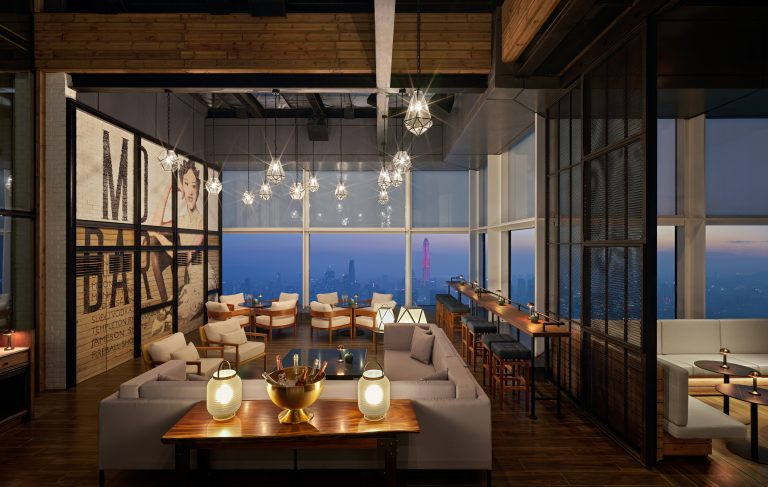
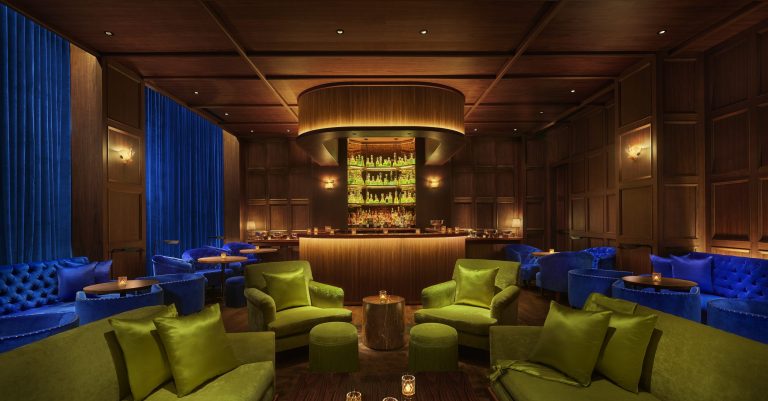
“Venice is not a static stage but an open-air museum,” says Paola Mencarelli, “a living organism, delicate and extremely generous to those who know how to listen to it.” It’s a fitting line from the woman who has spent the past decade teaching Italy how to drink — and, in the process, how to look at its own cities differently.
Mencarelli built her reputation in Florence, where she launched the country’s first Cocktail Week in 2016. Cortina and Tuscany followed. But it’s Venice, since December 2021, that has become her most ambitious canvas: a city where the format had to bend to the place, rather than the other way around.
Now in its fifth edition, Venice Cocktail Week has grown into something closer to a citywide ritual — grand hotel bars, centuries-old cafés, and hidden independent haunts, all folded into a single week that moves at the city’s own tide.

Here, Mencarelli talks us through how to actually experience it: where to base yourself, what’s worth the ticket and what’s strictly for insiders, and the unspoken etiquette that separates a tourist’s night out from a Venetian’s.
She traces the uneasy, productive friction between the opulence of hotel bars and the scrappiness of the independents, makes the case for the low-ABV “Aperitivo di Mezzogiorno” as the week’s truest expression, and explains why VCW has refused — deliberately, stubbornly — to import the playbook of other European festival cities.
The result isn’t a hit list of the best bars in Venice. It’s an argument for a slower way of seeing it — one glass, one calle, one conversation at a time.
Q&A with Paola Mencarelli, Founder & Creative Director, Venice Cocktail Week

For a first-time guest, how would you design an ideal 5-day arc through VCW — both before arrival and during the week?
Planning a trip to Venice means preparing for an adventure in a city that has nothing ordinary about it, starting from the arrival. Whether you arrive by car at Piazzale Roma, by train at the railway station, or by plane at Marco Polo, boarding a private water taxi is the first true ritual: crossing your hotel’s water entrance is the ideal gateway into the magic of the lagoon.
Before arrival, I suggest selecting no more than two or three key events per day, leaving room for spontaneity and strolling. During the week, the secret is alternating the pace: moving by vaporetto for an immersive experience of Venice’s most vibrant and authentic side, and walking through the sestieri to discover all the participating cocktail bars.
The perfect five-day arc begins with a slow first contact between historic cafés and hidden courtyards, winds through Midday Aperitivos, masterclasses and guided tours, and culminates in evening guest shifts with guests from the Italian and international bar industry.
“The perfect five-day arc begins with a slow first contact… and culminates in evening guest shifts with guests from the Italian and international bar industry.”


Oro

Photos by Michele Tamasco
Which base — which hotel, which sestiere — really puts a guest closest to the true center of gravity of Venice Cocktail Week?
VCW is a widespread event that, thanks to its sprawling nature, allows you to experience the entire city through a different light — that of its bars. There isn’t a single center, but several reference points that light up the city from one sestiere to the next.
San Marco and Castello (Classic elegance and iconic views): This is the beating heart of hotel bars and the historic cafés of the Piazza. Staying at addresses like The St. Regis Venice, Nolinski Venezia, Violino d’Oro, Hotel Saturnia & International, Palazzo Rota, or the slightly more distant Donà Palace, Angelo Art Hotel, Hotel Ala and Palazzo Keller guarantees a privileged vantage point.
Moving toward Riva degli Schiavoni to explore Castello (between the Giardini, the Biennale and Sant’Elena) opens the doors to Danieli Venezia, A Four Seasons Hotel, Metropole Venezia, Hotel Gabrielli Venezia – Starhotels Collezione, Ca’ di Dio and Hotel Bucintoro.
San Polo, Cannaregio and Santa Croce (Tradition, design and the truest Venice): Toward Rialto, Aman Venice, Hotel L’Orologio and Palazzo Venart offer a noble perspective on San Polo, while Cannaregio ranges from the bold architecture of The Venice Hotel and the brand-new Orient Express Venezia, to the refined quiet of Hotel Heureka, NH Collection Grand Hotel Palazzo dei Dogi, or alternatively Carnival Palace, Ca’ Bonfadini and Santa Croce Boutique Hotel, all the way to the railway station area with The Venice Times Hotel.
Dorsoduro and Giudecca (Art, slow rhythms and grand views): Dorsoduro welcomes with Hotel Nani Mocenigo Palace, Palazzo Veneziano and Il Palazzo Experimental, before crossing by water to Giudecca at Hilton Molino Stucky Venice or the new, exclusive Airelles Palladio Venice.
The Lido (Timeless charm): A short trip across the water leads to the sea, immersing you in the iconic atmosphere of the Excelsior Hotel Resort Lido di Venezia.
In each of these properties the bar culture of the grand hotels comes alive, while the independent cocktail bars in the surrounding calli and campielli are best reached on foot.
“There isn’t a single center, but several reference points that light up the city from one sestiere to the next.”

“It’s in this contrast between the grandeur of the palazzi and the intimacy of the street-level bar that the essence of the week lies.”
If a guest has only one evening, which single experience would you insistently recommend?
If time is limited to just a few hours, my advice is to reserve the early part of the evening for an aperitivo at a luxurious hotel bar, then close out the night at an intimate independent cocktail bar. It’s in this contrast between the grandeur of the palazzi and the intimacy of the street-level bar that the essence of the week lies.
How do you see the relationship between the grand hotel bars and the intimate independent bars — are they in dialogue with each other, or do they offer two completely different experiences?
They’re not just in dialogue — during Venice Cocktail Week they become accomplices. The grand hotel bars represent excellence of service, opulence of space, and a mixology tied to the classics of great international hospitality; the independent bars are laboratories of experimentation, incubators of trends, and gathering points for the local community.
The beauty of VCW lies in breaking down these boundaries: for the guest, moving from one setting to another over the course of an evening is the best way to feel the plural pulse of the city.

Of everything on the program — the Midday Aperitivo, the Masterclasses, the Guest Shifts, the Pop-Up Bars — what would you recommend as unmissable to a genuinely curious guest, and what exists more for industry insiders?
All the events are designed to welcome a broad, cultured and curious audience, but with different shades of appeal:
For industry professionals and serious enthusiasts: the technical Masterclasses and Guest Shifts are unmissable, since they bring together the great masters of the Italian and international bar industry and allow for close analysis of rare ingredients, advanced techniques and management philosophies.
For the curious guest seeking authentic experiences: the Midday Aperitivo is the true jewel. It’s a convivial moment deeply tied to local customs, where the drink is paired with a cicchetto.
Also not to be missed is the Barkeeper initiative — designed to tell the story of the city through the faces of resident bartenders — and the cultural tours created in collaboration with Tell Me a Story Venice, which weave the history of the sestieri together with the culture of mixed drinks.
“The Midday Aperitivo is the true jewel.”


Photos by Michele Tamasco
Of the three VCW26 creations, which one best captures the spirit of this edition?
The Midday Aperitivo. It represents the sublimation of a great Venetian tradition: a light, elegant drink meant to accompany food and celebrate conviviality without excess. At a time when global mixology is rediscovering low alcohol content (low-ABV) and the pursuit of balance, Venice responds simply by drawing on its centuries-old history, reinterpreted with the contemporary techniques and style of our bartenders.
Is there an unspoken etiquette for moving through Venetian bars during VCW that most guests don’t realize they should observe?
Yes, and it has to do with time and measure. In Venice, you don’t “consume” a bar — you adapt to its flow. In the more intimate cocktail bars, space is precious and conversation with the bartender is a privilege to be cultivated patiently, without haste.
Another golden rule concerns respect for the places themselves: moving from the noble floors of ancient palazzi to a neighborhood bar requires the ability to tune into the atmosphere of each setting. And finally, remember that in Venice, water is the true street: planning your movements with the tides and navigation times in mind isn’t just logistics — it’s a form of respect for the nature of the city.

“Look for the places where the bartender calls the customer by name — that’s where VCW shows its truest face.”
How does one find the version of VCW that Venetians themselves would choose?
You have to follow the rhythm of the day, not that of the maps. Venetians experience VCW by starting early: the Midday Aperitivo in the historic cafés is when residents meet convivially before lunch.
They also tend to favor the cocktail bars of sestieri like San Marco, Castello or Cannaregio, preferably on weekdays, enjoying moving through the city without the pressure of mass tourism. Look for the places where the bartender calls the customer by name — that’s where VCW shows its truest face.
You’ve described VCW as an invitation to see the city through a different lens rather than as a ranking of the best bars. How does this translate concretely into a single evening?
It translates into transforming a sequence of drink orders into an itinerary of urban and human discovery. Rather than drawing up a list of places to “check off,” an evening guided by VCW invites the guest to follow a waterway or a network of calli with a precise purpose: to discover how each cocktail tells a fragment of Venetian history.
Perhaps a spiced ingredient that recalls the Serenissima’s trade routes to the East, served in a secret garden whose existence you never suspected. A ranking rewards the product; the VCW lens rewards the place, the story, and the people who bring it to life.
Five editions in, what has fundamentally changed about VCW — and what has refused to change?
What has changed is the city’s own awareness, thanks to the growing synergy among all the properties involved, but also that of the bar industry toward us — today VCW is a fixed date on the calendar of industry players.
What has categorically refused to change is the conservative spirit and adherence to Venice’s identity. Radical change and innovation at all costs are necessary where history and tradition are lacking. An iconic reality like Venice must instead preserve its own memory. VCW has never wanted to distort the city to chase the formats of other European capitals; we’ve preferred to let the world of mixology adapt to Venice’s uniqueness.
What do you want a guest to understand about the city by the last glass that they couldn’t have understood by the first?
I would like them to understand that Venice is not a static stage but an open-air museum, a living organism, delicate and extremely generous to those who know how to listen to it. At the first glass, you perceive the aesthetic beauty, the grandeur of the palazzi, the allure of the reflections on the water.
At the last glass, after listening to the bartenders’ stories, walking in the quiet of a calle late at night, and coming into contact with the true community of Venetian hospitality, you understand that the real luxury here is time. Venice shouldn’t be visited — it should be inhabited, with respect, one sip at a time.